What changed in my studio this fall
Why I moved from software monitoring to a Roland V71 and analog processors, and what changed about sitting down to play.
Published Updated
In this post
In September I rebuilt the sound in my headphones because I wanted playing to be fun again. I wanted to shape the drums and explore sounds while I played, and to feel connected to the kit the way I do on stage.
I was already recording a hybrid kit: real cymbals through microphones, with the kick, snare, and toms captured as MIDI. That performance data lets me choose drum sounds after the take. The upgrade changed what I could hear and control while I was playing.
Why I wanted a change
Until September, my Roland triggers and eDRUMin 8 fed MIDI to Addictive Drums 2 or Steven Slate Drums 5. The delay I felt between a hit and its sound, along with the lack of hands-on controls, took some of the fun out of sitting down at the kit.
I wanted to reach for a control, hear the change as I played, and follow whatever idea came out of it. That was the reason for adding the Roland V71 drum sound module, digital snare, and analog gear.
From trigger interface to drum module
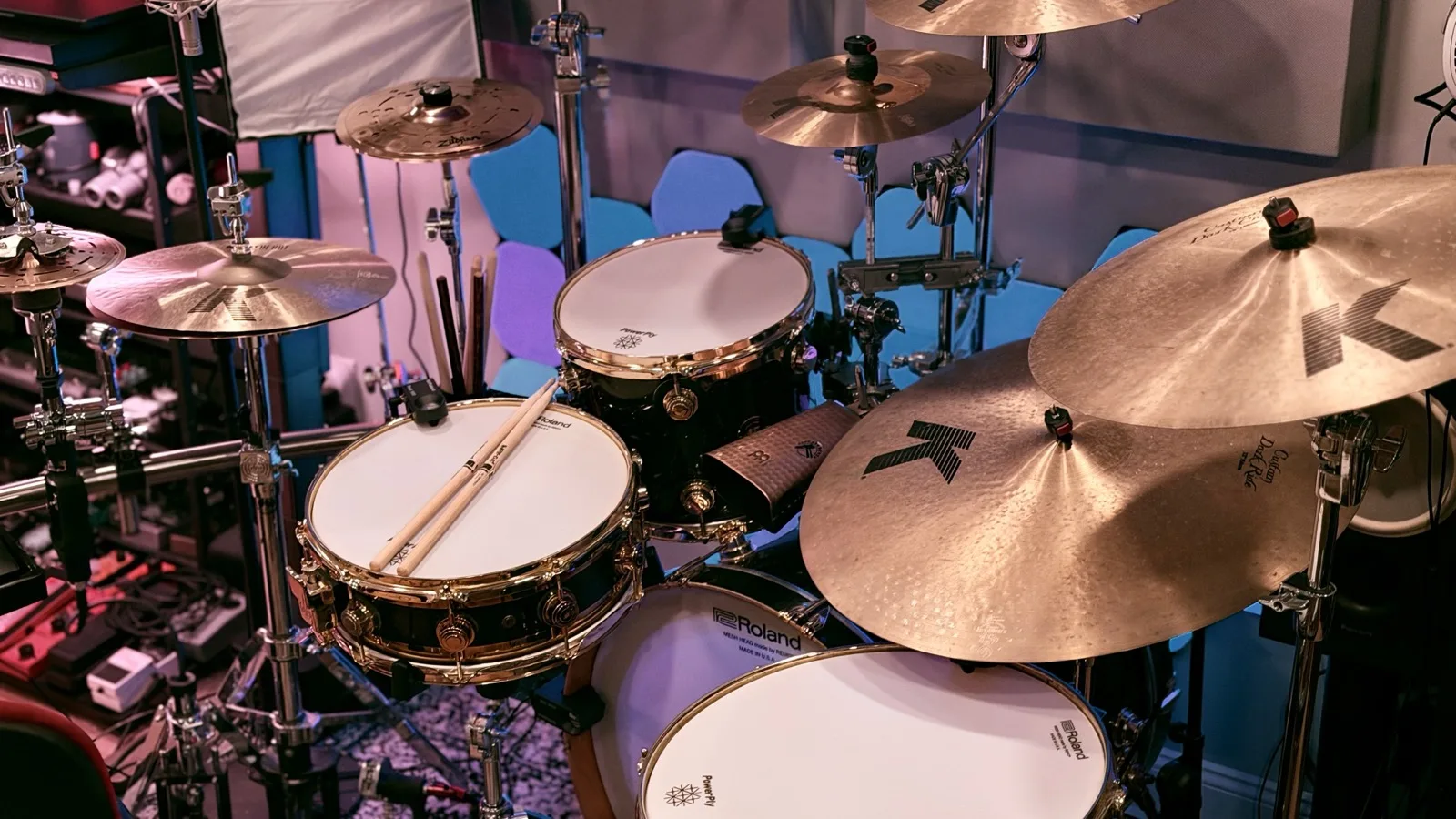
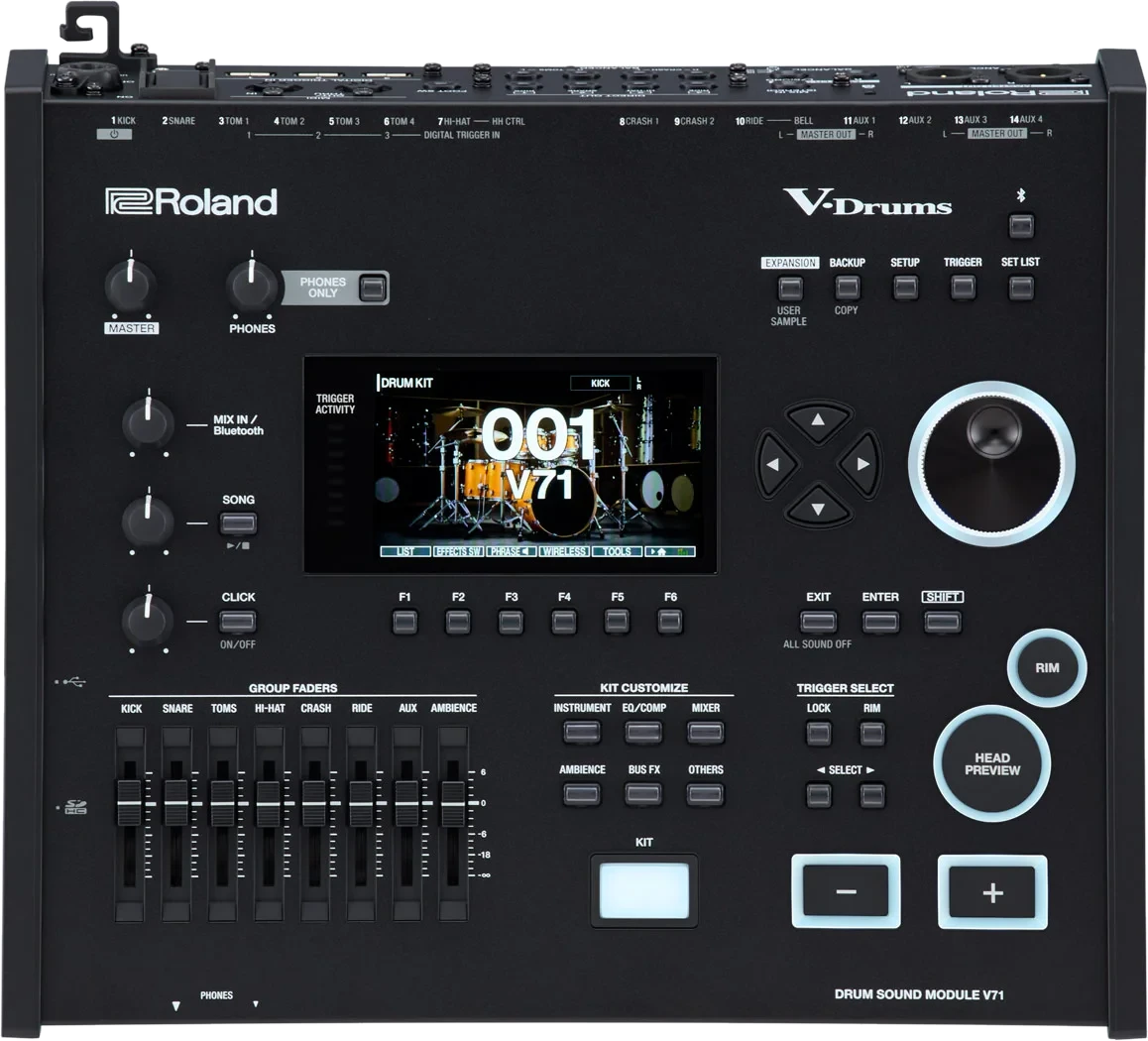
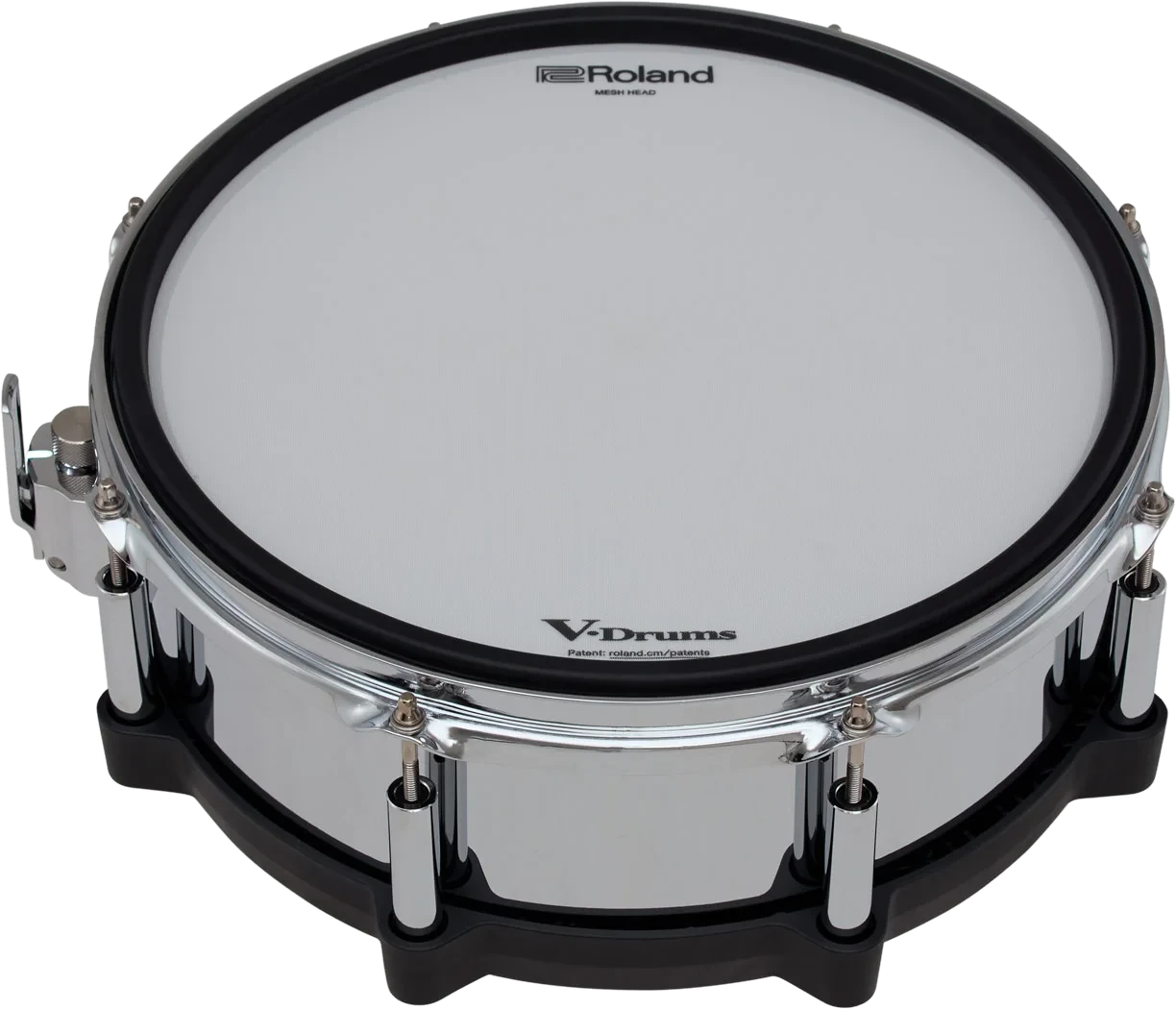
The V71 now handles the triggers on my DW kick and toms, plus the Roland PD-14DSX digital snare. It sends MIDI to my recording software and generates the sounds I hear while playing, so my headphone sound no longer depends on a software drum instrument.
The V71 plays multi-sampled recordings of acoustic drums, with samples for different playing strengths and variations between repeated hits. Roland also uses behavior modeling to refine how those sounds respond to the playing, but recorded drums are the foundation of these kits.
I use its built-in DW sounds and two Roland Instrument Expansions: DW Collector’s Series Pure Maple: Producer Position and Slingerland Vintage 1958. These expansions add recordings of additional acoustic kits to the module. That gives me a choice of sampled drums at the kit, with faders I can reach while playing.
What I hear now
The kick and snare each have an Empirical Labs Distressor compressor. The cymbal mix goes through an elysia xfilter stereo EQ, and the drums come together through an API 2500+ bus compressor. A Walrus Audio DFX-1 percussion processor adds delay and ambience when I want it.
I hear that processing in my headphones while recording the raw V71 drum audio, dry cymbal tracks, and MIDI performance. The live headphone signal bypasses the recording software; the files capture the performance before the outboard processing.
The routing and what each processor does are in What I hear while I play.
Making playing fun again
The kit brings back some of the feeling I remember from sitting behind a real kit on stage, with monitors and subs kicking the drums back at me. Even when I’m just messing around in my room, I want to stay behind the kit.
If the kick has weight and the snare has attack, I play the part differently. I can change that sound while I play, or bring in an effect and let it change the space I leave between notes. That back-and-forth between the sound and the playing is what I wanted from this upgrade.
The outboard processors are my choices for making the kit more enjoyable to play. I was already making hybrid recordings before I added them.
What it adds to a session
The standard delivery hasn’t changed: four dry cymbal tracks and the kick, snare, and tom performance as MIDI from the same pass. I can now also print the V71 sounds as audio, alongside the software drum sounds I could already offer.
After the session, I can use the Distressors and API 2500+ on the recorded drum audio to fine-tune the sound. The processing I played to is a starting point, and I can revisit it with the whole song in front of me. Processed audio or a finished stereo drum mix is available on request.
You can hear different drum sounds against one performance in the kit-switching player. It uses Addictive Drums 2 presets, so it shows what the MIDI can do, not what this new headphone chain sounds like.