DW
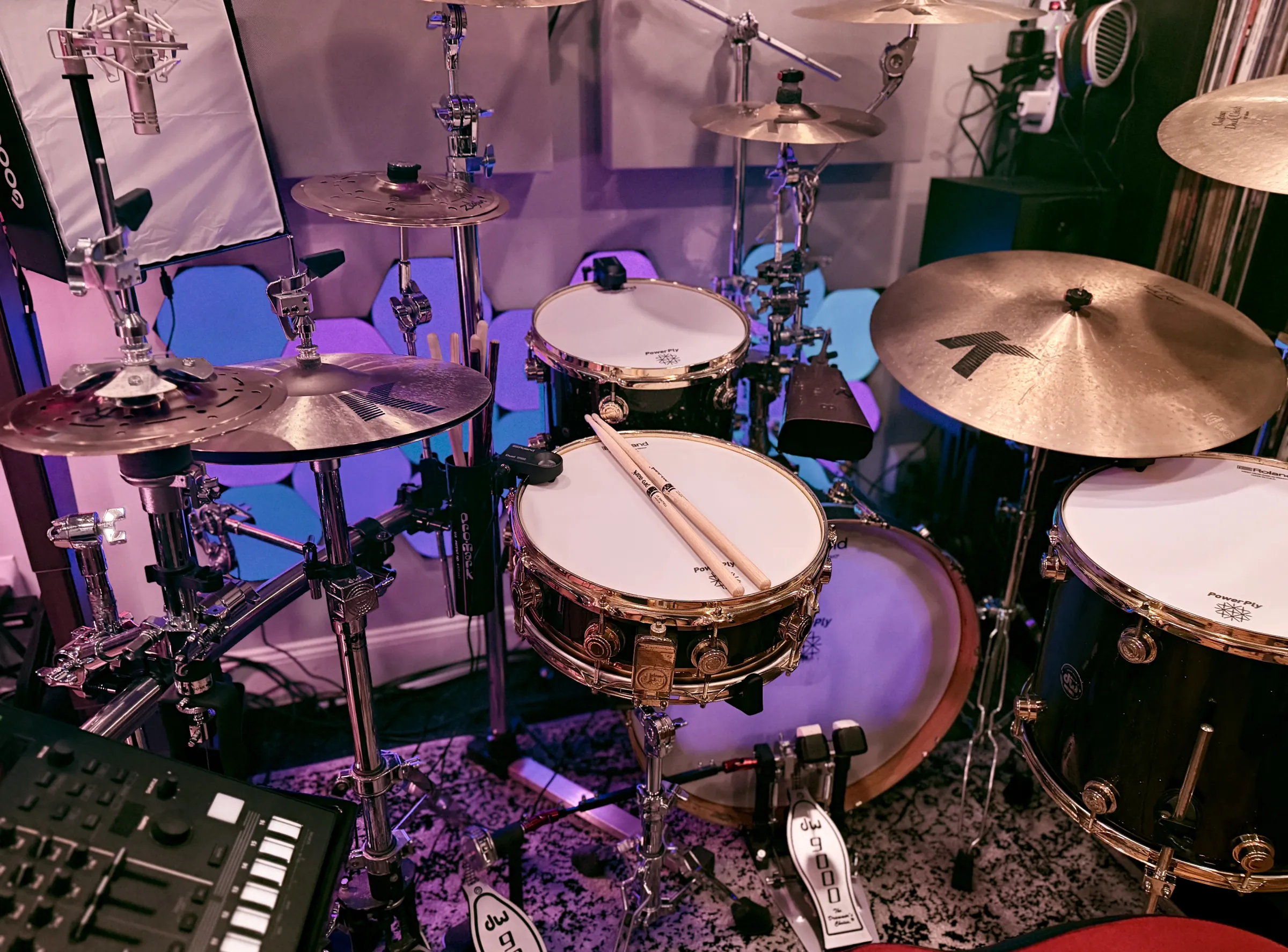
Four-piece Collector’s Series + Quiet Mesh Heads
The four-piece maple shell pack is fitted with quiet mesh heads and triggers. Its shell sizes and familiar spacing let me play naturally while keeping acoustic shell volume low in the cymbal mics.
My home studio is built around a four-piece 1997 DW Collector’s Series maple kit, an Audiofront eDrumIn 8 trigger interface, six cymbal mics, an API 3124V four-channel mic preamp, an Apollo x8 Gen 2, broadband room treatment, and more than 30 Zildjian cymbals.
Miking shells and a room takes most of a session’s setup time. On the major-label records I played on, most of that work got blended with samples anyway. The cymbals never did, so that’s where the mics go, and the kick, snare, and toms come back as MIDI.
For the session format, the stems player, and delivery files, start with the Sessions page
The DW shells stay fitted with quiet mesh heads and triggers, with the same sizes, spacing, and cymbal placement I normally play.
The four-piece maple shell pack is fitted with quiet mesh heads and triggers. Its shell sizes and familiar spacing let me play naturally while keeping acoustic shell volume low in the cymbal mics.
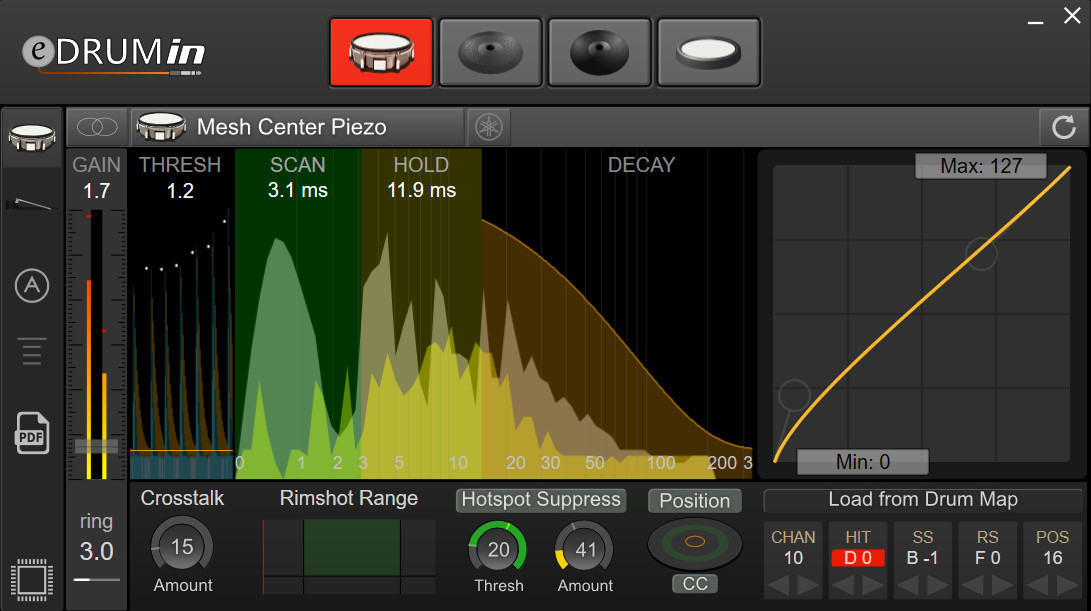
The trigger interface turns the shell response into MIDI. I calibrate each pad for ghost notes, rimshots, rolls, and the full dynamic range of the part. The shell MIDI in the Sessions page stems player came through this box. If a part calls for an additional high or low tom, I can add a Roland V-Drums pad and route it through the same interface.
Six mics are positioned for two overhead perspectives plus dedicated hi-hat and ride control. Both overhead pairs can print from the same take, and whichever one we pick as the main image runs through the API 3124V preamp.
Two permanent WA-84 overhead pairs give me a wider spaced AB option and a tighter XY option. SM81 spot mics add independent hi-hat and ride control.
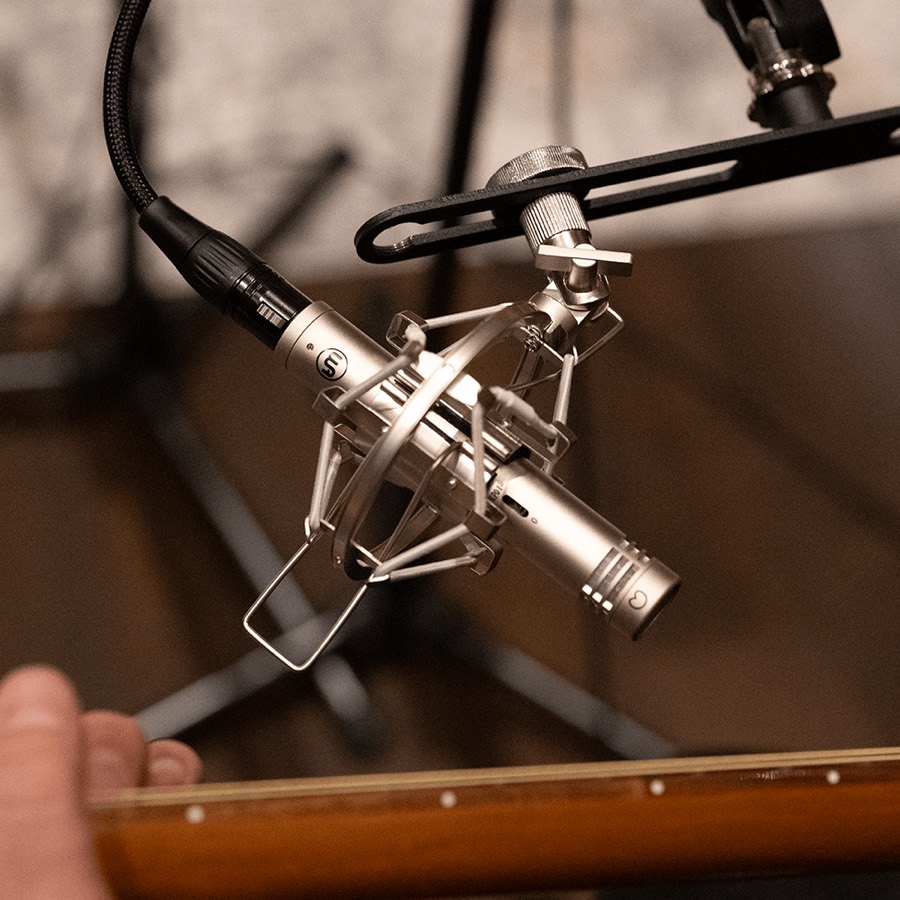
Four KM 84-style small-diaphragm condensers form two permanent pairs: spaced AB for width and XY for a tighter, mono-compatible image. I’ve tried a lot of overhead mics with only cymbals in front of them, and these have been the best fit for that job.
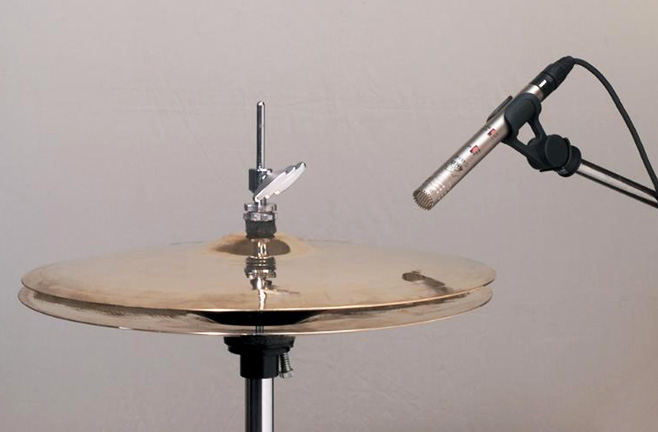
Cardioid small-diaphragm condensers on the hi-hat and ride for stick definition and bell articulation.
The selected overhead pair, hi-hat, and ride run through the four channels of the API 3124V mic preamp into the Apollo x8. An alternate overhead pair can use the Apollo’s clean preamps or a Unison preamp plug-in.
Cymbals are captured at 24-bit, at the sample rate your session runs at.

The API 3124V four-channel mic preamp is the primary front end for the selected overhead pair and the two spot mics. Its discrete Class A design and 2520 op-amps give the cymbals a sound I like, while the variable output controls let me manage level into the Apollo.

The main converter and interface. It receives the API outputs at line level and can capture the alternate overhead pair through its clean preamps or a Unison preamp plug-in when I want another color. A broad UAD plug-in collection is available for monitoring and rough listen-back mixes. When I mix drums for my own videos, the bus chain is the SSL G Bus Compressor and a room reverb over a low-pass on the cymbals. Delivered tracks stay unprocessed unless we agree on a sound going in.
While I track, I’m in UAD Console setting up inputs and a monitor mix, in Pro Tools capturing and organizing takes, and in the drum libraries auditioning kick, snare, and tom sounds against the cymbals. The MIDI stays aligned with the audio the whole way through, so nothing gets locked in before it has to be.
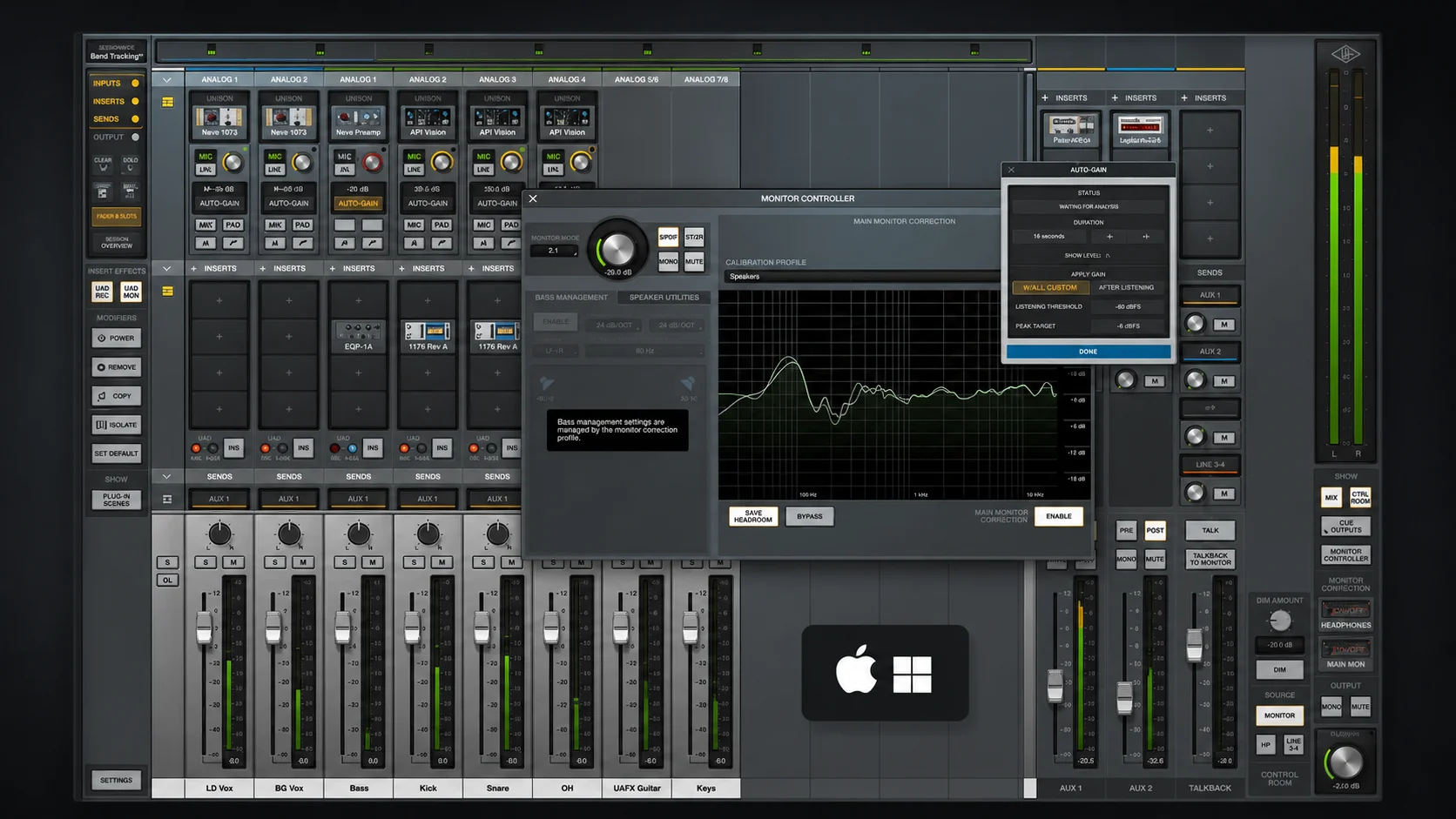
The control layer between the Apollo and the DAW. I use it for input routing, low-latency monitoring, and rough listen-back chains while I track. Unless we agree on a sound going in, delivered tracks stay unprocessed.
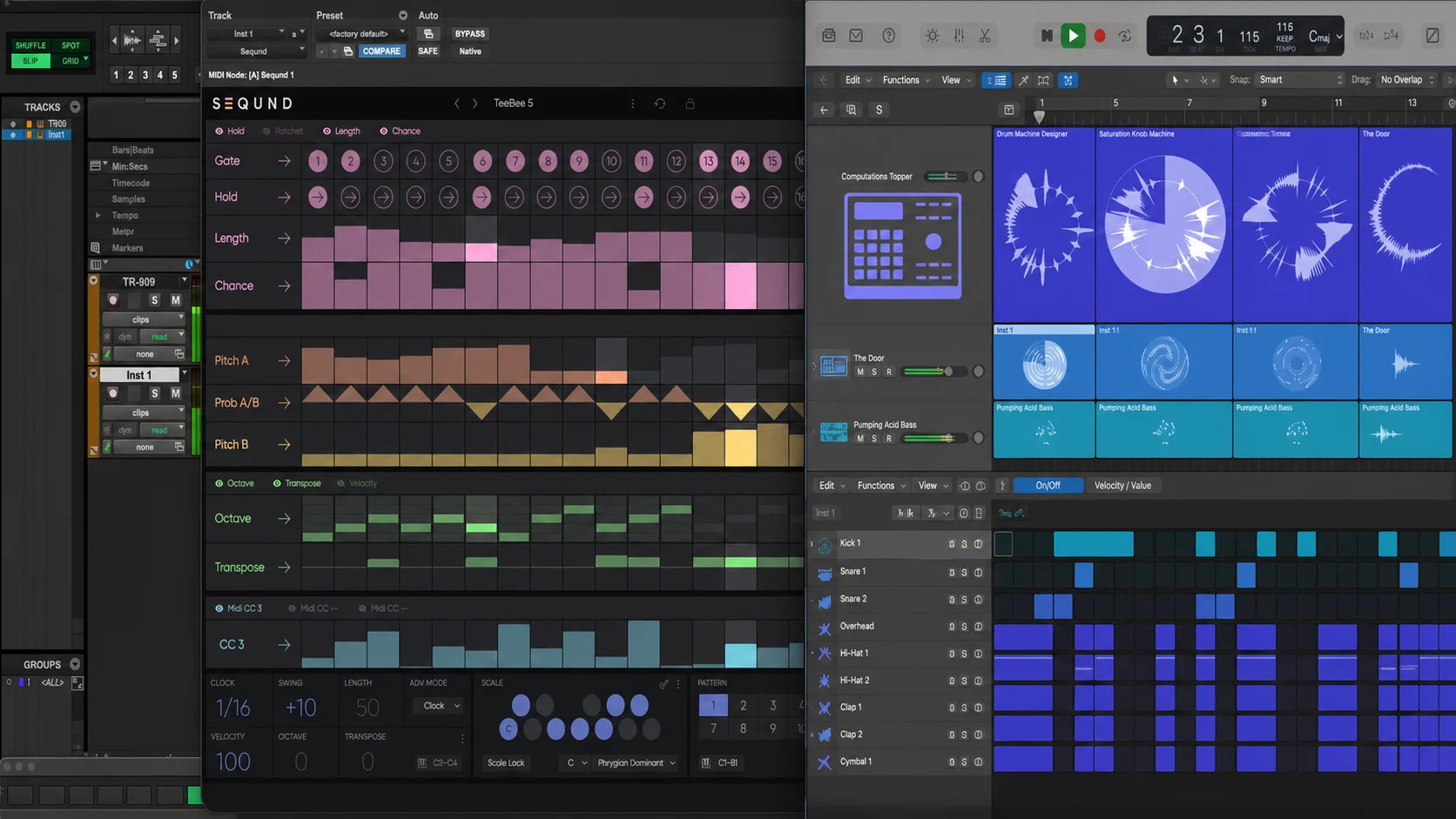
Pro Tools is my preferred DAW for tracking drums. Its playlists and grouped-track workflow make it easy to record, organize, and compare full-kit takes. Logic Pro is also available when a project calls for it. Either way, I can deliver aligned audio and MIDI tracks ready to import into the DAW you use.
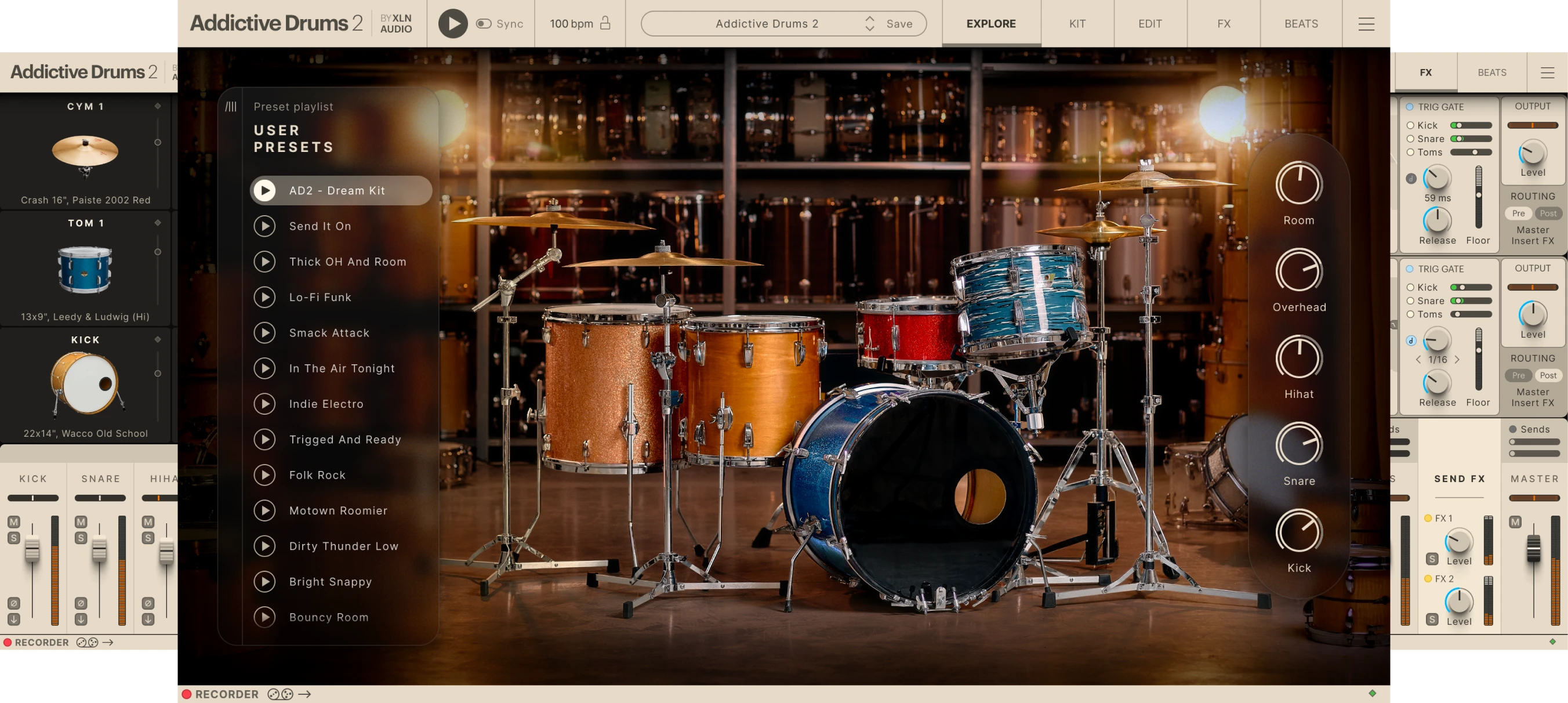
Multi-mic recordings of real kits in real studios. Every shell kit in the Sessions page stems player is a stock preset from it, printed from the same MIDI, and it is one of my options when I print kick, snare, and tom stems.
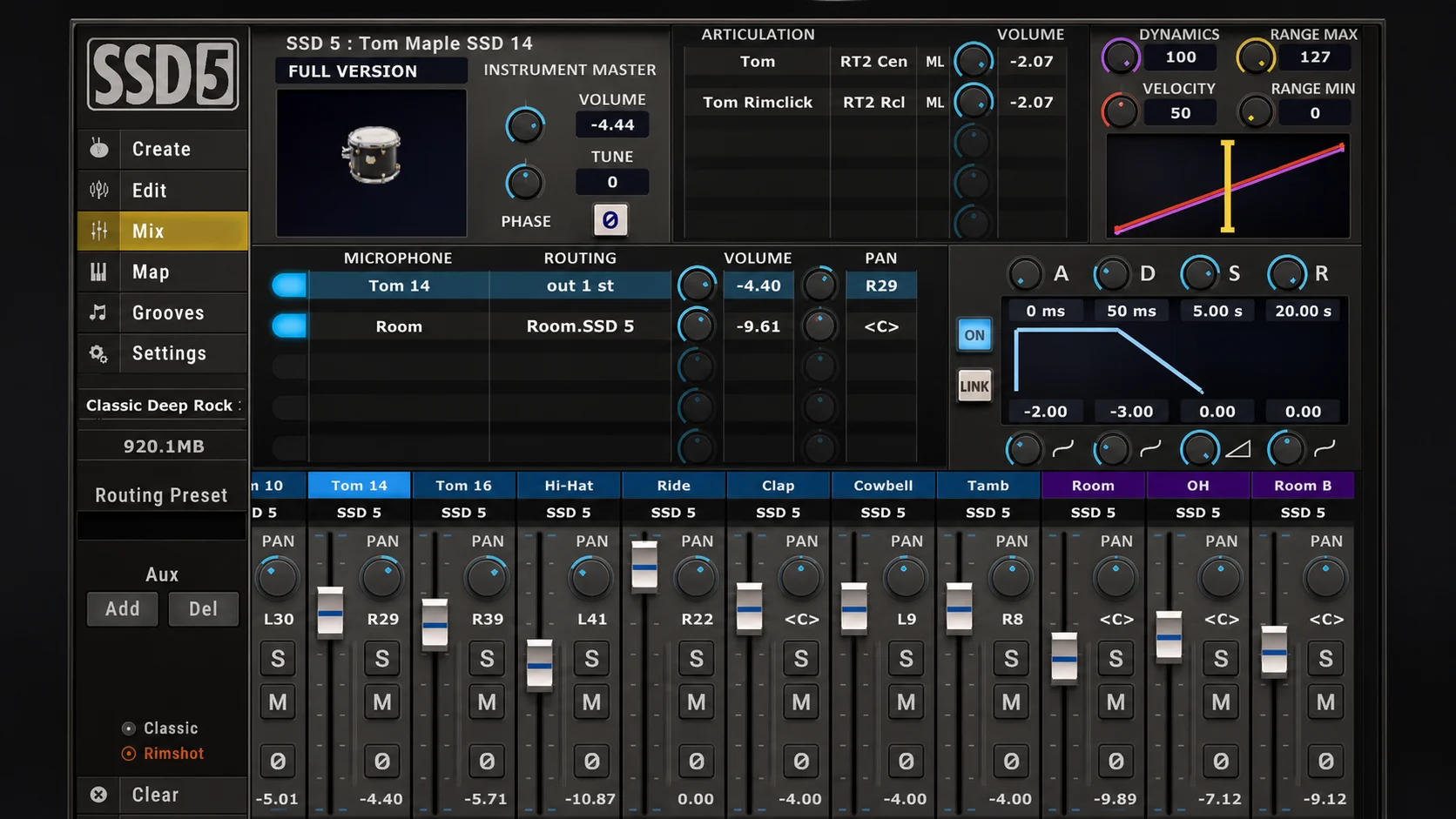
Recorded to 2-inch tape with vintage gear, from the same company whose Trigger plugin is widely used for drum replacement. My other option when I print kick, snare, and tom stems.
With the acoustic shell volume out of the room, I can treat the space specifically for the cymbal mics.
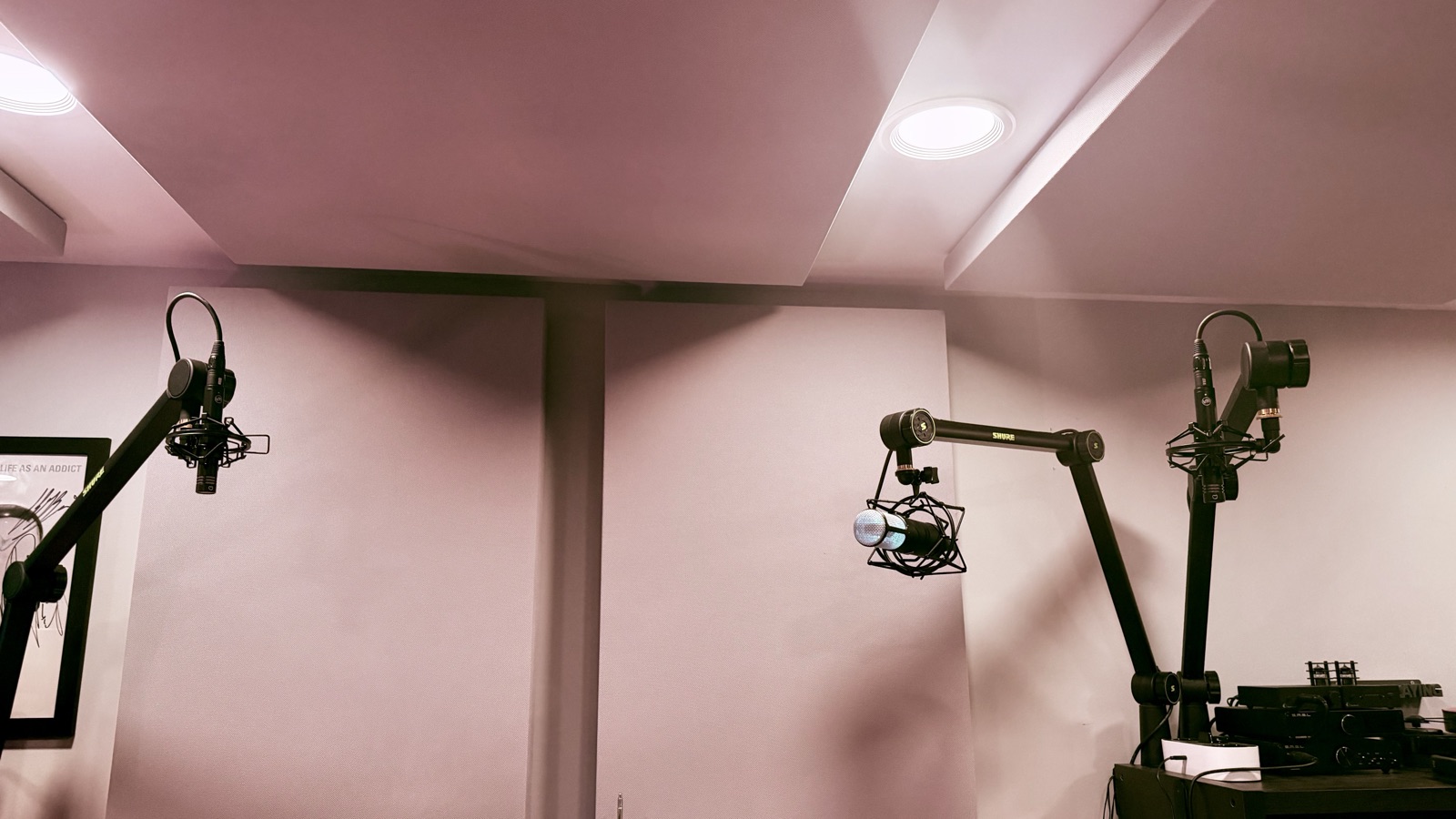
Broadband panels control early reflections so the overheads capture more cymbal and less room.
Almost everything about a hybrid session stays open after the take. The shell sounds are a mix decision, the MIDI can be edited, and the kit can change a week later. The cymbals cannot. They are recorded as audio, and whatever I hit is what the record gets.
So that call gets made before I play, and I keep the options on hand to make it well. More than 30 Zildjians across five families, deep enough in crashes, rides, and hi-hats to cover a whole record.
Once I hear the song, I usually know whether the cymbals should stay tight and dark, open up wide, or cut through guitars. If you have something specific in mind, build it below and it comes with your message. Otherwise, I’m happy to make the call.
Load a setup as a starting point, then change anything you want.
K Sweets across the kit. Thin weights and a rounder attack that opens into a big wash. They remind me of a broken-in set of 1980s As, and they are my first call for rock right now.
K Dark crashes and a K Custom Dark ride with tight 13-inch K hats. Quick decay that tucks under vocals and dense guitars.
A Customs with a quick attack and clear top end for tracks that need the cymbals to speak right away.
K Constantinoples with a low, smoky, old-record sound. Less shimmer, more air.
New Beat hats, bright A Custom crashes, and the 24-inch Z MegaBell ride for loud guitars and tracks that need a lot of cut.
Grouped by where it sits on the kit and drawn to scale, so a 24-inch ride reads against a 6-inch ZilBel the way it does in the room.
From 13-inch Ks that stay tight and dry under a dense arrangement to 15-inch K Sweets that open up wide on a ballad.
14"
K Sweet
15"
K Sweet
13"
K Dark & Custom
14"
A Custom & Avedis
14"
A Custom & Avedis
14"
K Constantinople
Dry and vintage through bright and cutting, plus a 24-inch Z MegaBell for tracks that want a bell that carries over guitars.
22"
K Dark & Custom
22"
K Dark & Custom
21"
K Sweet
20"
A Custom & Avedis
22"
A Custom & Avedis
22"
K Constantinople
24"
Vintage & FX
20"
Vintage & FX
18"
Vintage & FX
14 through 18 inches. The small ones are for fast accents that get out of the way. The 18s bloom and decay slowly enough to sit under a vocal.
14"
K Dark & Custom
18"
K Dark & Custom
16"
K Dark & Custom
16"
K Sweet
18"
K Sweet
14"
A Custom & Avedis
17"
A Custom & Avedis
16"
K Constantinople
18"
K Constantinople
16"
Vintage & FX
Splashes, stacks, and a ZilBel for short, trashy accents and quick color.
10"
A Custom & Avedis
10"
Vintage & FX
8"
Vintage & FX
6"
Vintage & FX
8"
Vintage & FX
6"
Vintage & FX
6"
Vintage & FX
The Sessions page has the stems player and the download, plus delivery files, workflow, and the fully acoustic alternative.